Arc light and the power of the sun
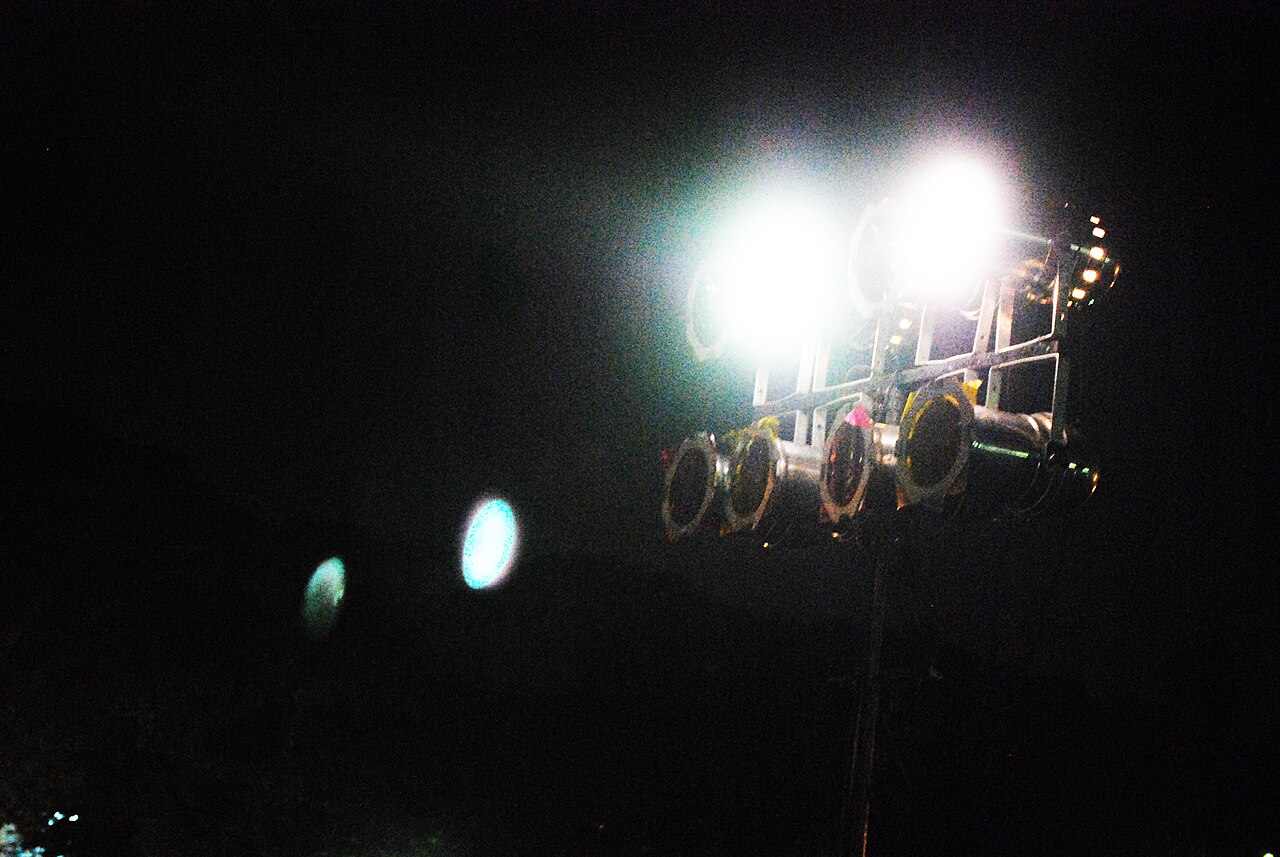
Early films needed enormous amounts of light because film stock was still very insensitive. Many studios of the silent era had glass roofs and shot with daylight. Artificial light came from carbon arc lamps: a glaring white arc burns between two carbon rods — extremely bright, but loud, hot, flickering and dangerous due to ozone and smoke.
The optical basis of many fixtures goes back even further: the Fresnel lens, named after the physicist Augustin-Jean Fresnel (originally developed for lighthouses in 1822), focuses light into an adjustable beam using little glass — still the principle of the classic film fixture today.
When Robert Flaherty shot „Nanook of the North", the carbon arc lamp was the standard for artificial light. Its drawbacks — noise, heat, the constant feeding of the carbon rods — determined for decades what was even possible on set.
The tungsten fixture conquers Hollywood
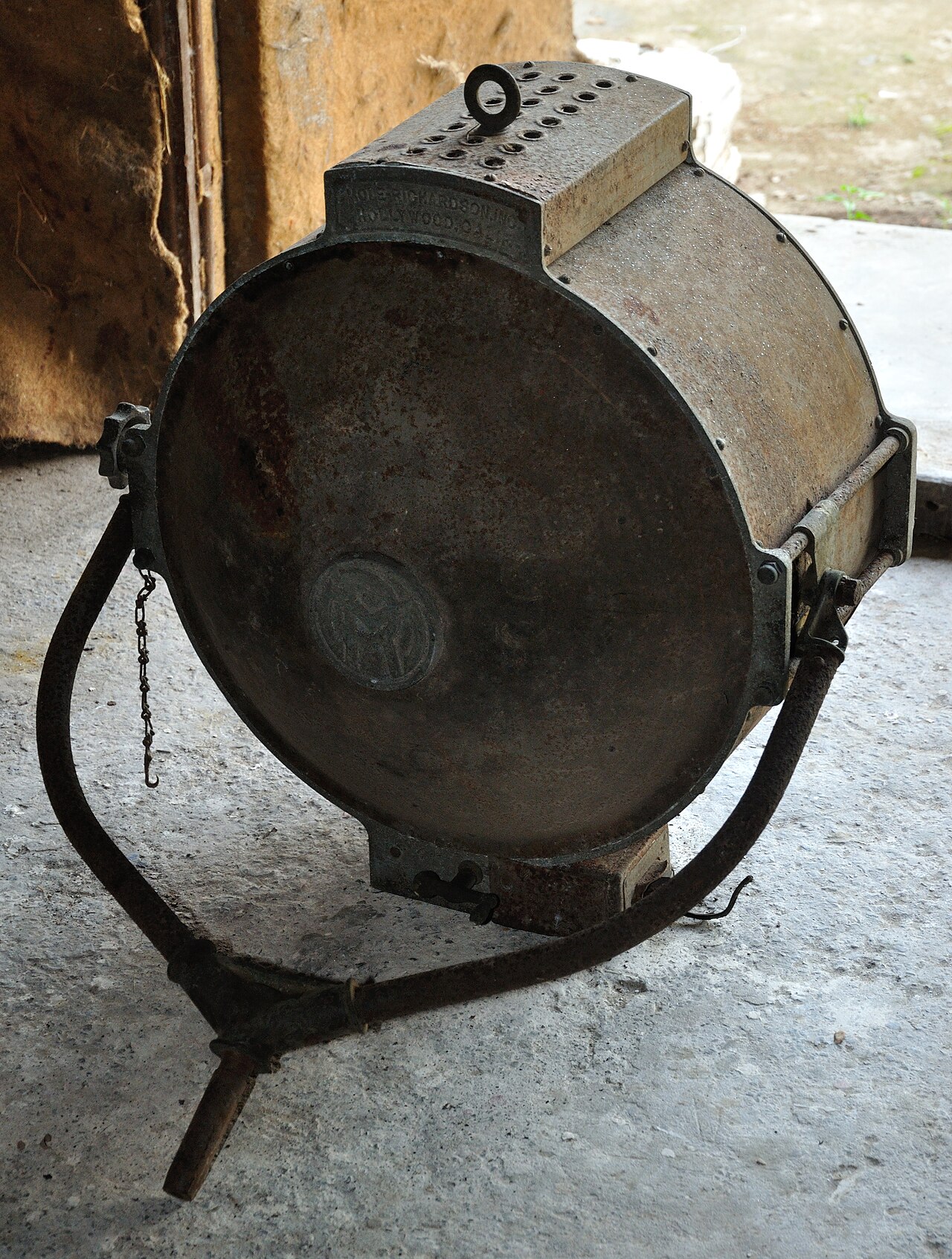
With sound film from 1927, the loud, hissing arc light became a problem — it disturbed the sound recording. The solution was the incandescent fixture with a tungsten filament: quieter, more even and constant in colour temperature at around 3200 Kelvin.
In 1927, Peter Mole and Elmer Richardson founded Mole-Richardson in Hollywood — the company standardised the tungsten Fresnel fixture and shaped an entire industry through its naming:
- „Baby", „Junior", „Senior", „Tenner": the Fresnel spots, graded by wattage, became the worldwide vocabulary of the set.
- The Fresnel spot allows continuous „spot/flood" control — focusing the beam by moving the lamp relative to the lens.
- This era shaped the high-contrast, sculpted „studio look" of classic Hollywood and film noir.
Daylight from the wall socket
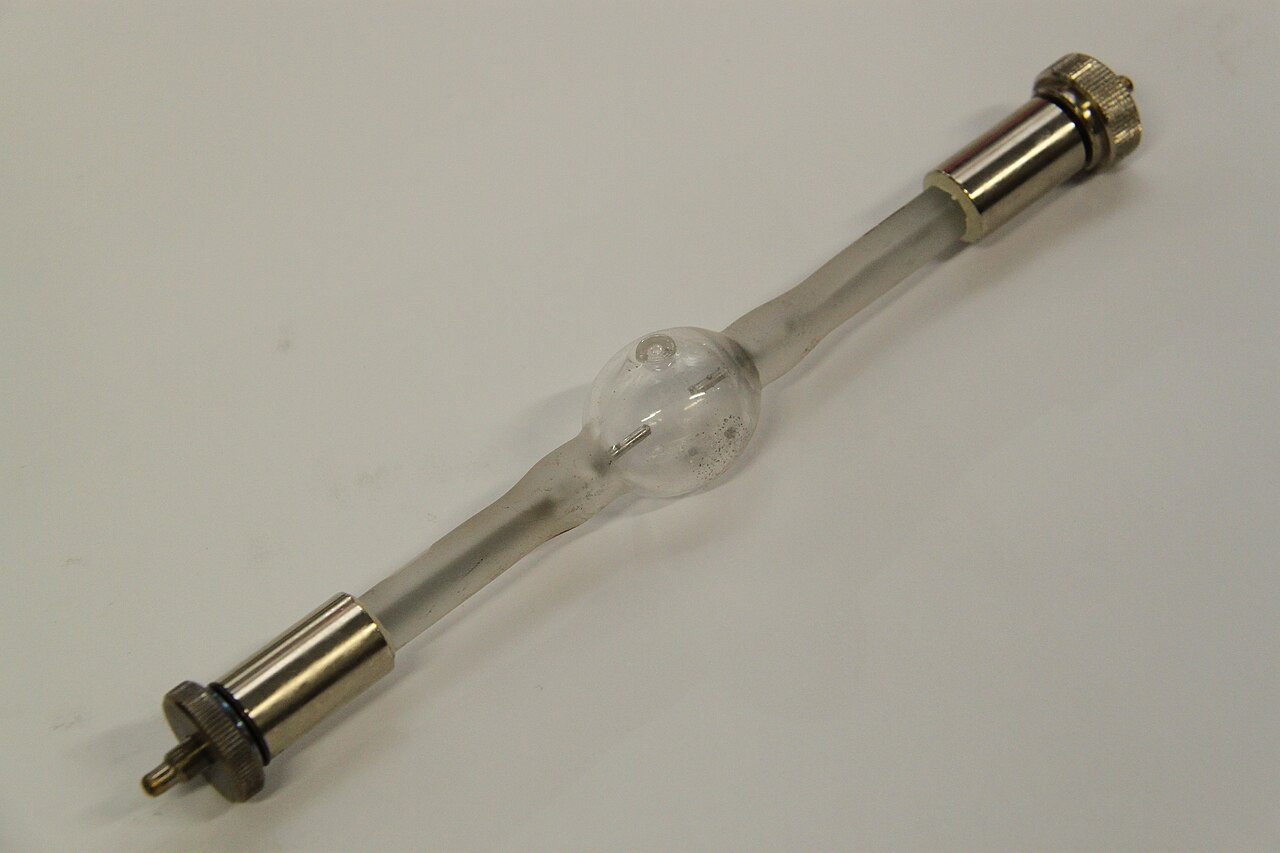
The greatest leap in lighting history came from Munich. The HMI lamp (Hydrargyrum Medium-arc Iodide) is a gas-discharge lamp that produces daylight-white light at around 6000 Kelvin — and is many times more efficient than incandescent light.
Developed by OSRAM at the request of the German film industry (designed in 1967 by Dr. Bernard Kühl and Alexander Dobrusskin), the HMI lamp was first used publicly in 1969. It replaced the dangerous carbon arc lamp as a daylight source. In 1988, OSRAM received a technical Oscar from the Academy for it.
Practical consequences: at last, daylight in the studio — or as a fill outdoors — could be produced affordably. HMI fixtures could simulate „sun" through windows and balance interiors with the outside light — without needing the power draw of a bank of carbon arcs.
| Light source | Colour temperature | Character |
|---|---|---|
| Carbon arc | ~5500 K | Very bright, loud, hot, dangerous |
| Tungsten | ~3200 K | Warm, quiet, constant, inefficient |
| HMI | ~5600–6000 K | Daylight, efficient, needs a ballast |
| Fluorescent (Kino Flo) | 3200 / 5600 K | Soft, cool, flicker-free |
| LED | freely adjustable | Controllable, colour-changing, efficient |
Soft light becomes portable
Alongside output, the quality of light came into focus: soft, flattering light through diffusion and reflection. Softboxes, Chimeras, bounces and „China balls" (paper lanterns) shaped the more natural look of the 1980s and 1990s.
On the set of the film „Barfly", cinematographer Robby Müller faced a cramped interior that no large fixtures would fit into. Gaffer Frieder Hochheim and best boy Gary Swink built a high-output fluorescent light with a remote ballast — making the fixture flat and light enough to even tape to the wall. This gave rise to the company Kino Flo (awarded a technical Academy Award in 1995). „Kino" means cinema, „Flo" stands for fluorescent.
Fluorescent tubes delivered cool, flicker-free and colour-accurate light with little heat — ideal for faces and tight sets. The Kino Flo banks (such as the „4Bank") became a standard part of every lighting package.
Light becomes programmable
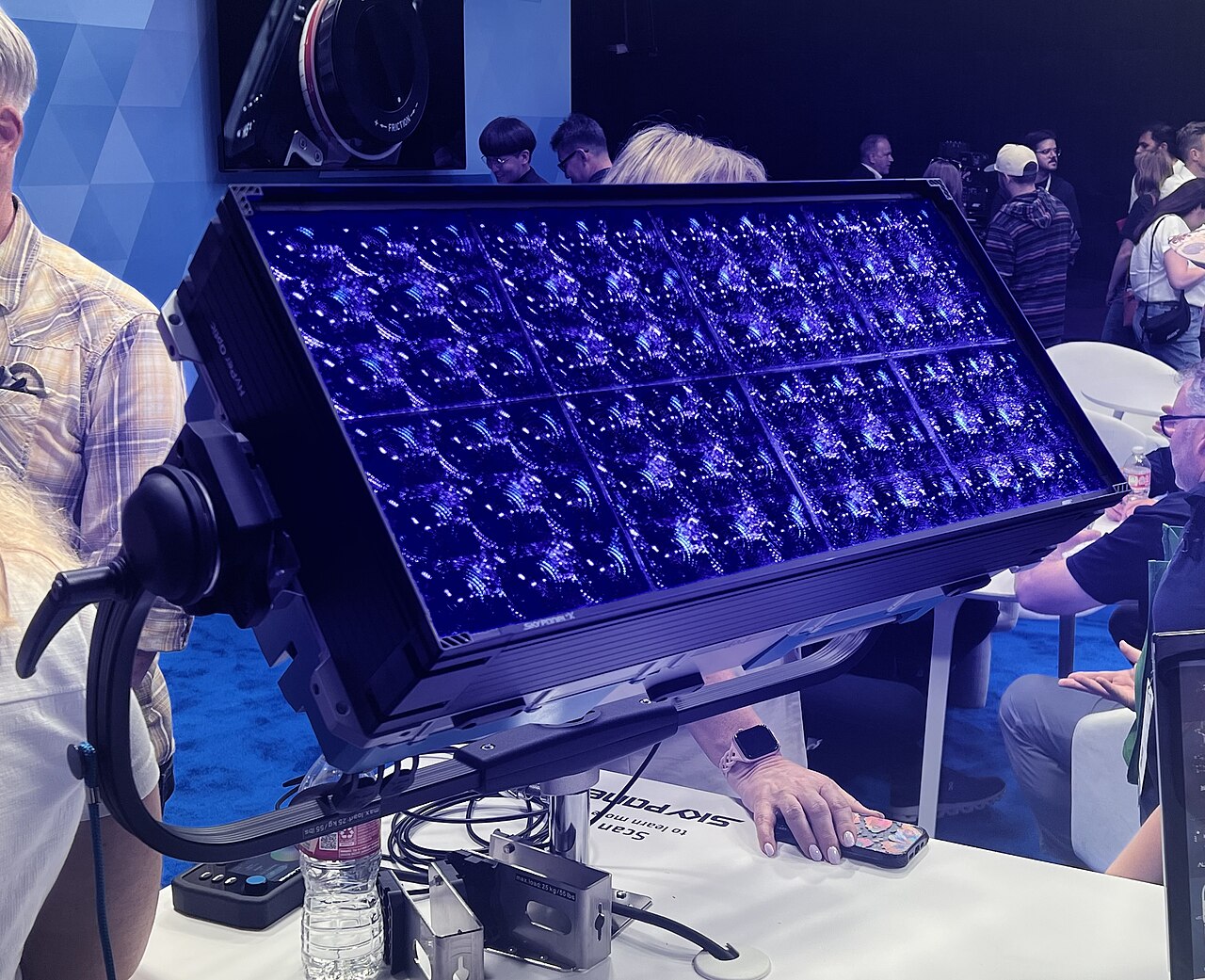
LEDs combine what was previously spread across different lamp types: high efficiency, low heat, long life — and above all full controllability. Colour temperature, brightness and, on RGBWW models, the entire colour can be adjusted steplessly and by remote control.
- ARRI SkyPanel (from 2015): made controllable LED soft light a set standard — bi-colour, RGB, lighting effects (lightning, fire, police lights) via menu.
- Aputure (e.g. 600d, 300x) and Nanlite (Forza series) brought powerful LED light into affordable territory and democratised professional lighting.
- Litepanels was among the pioneers of flat LED panels for film and broadcast.
- Pixel mapping: LED matrices and tubes (e.g. Astera Tubes) can be addressed pixel by pixel and used as moving light sources or effect surfaces.
„The Mandalorian" made the StageCraft technique widely known: huge, high-resolution LED walls display the background while simultaneously lighting the actors with realistic, reflected ambient light. Light and set merge — reflections in eyes, helmets and costumes match automatically. It is the provisional culmination of a development that began with the hissing carbon arc lamp.
Sources & further reading
- OSRAM — 50 years of HMI, technical Oscar 1988
- Wikipedia: HMI lamp (Kühl / Dobrusskin, 1967/1969)
- Kino Flo — company history; Wikipedia: Kino Flo (Barfly, 1987)
- Mole-Richardson — company history
- ARRI — SkyPanel
- Technical literature on Fresnel optics & tungsten lighting