Hold steady, pan cleanly
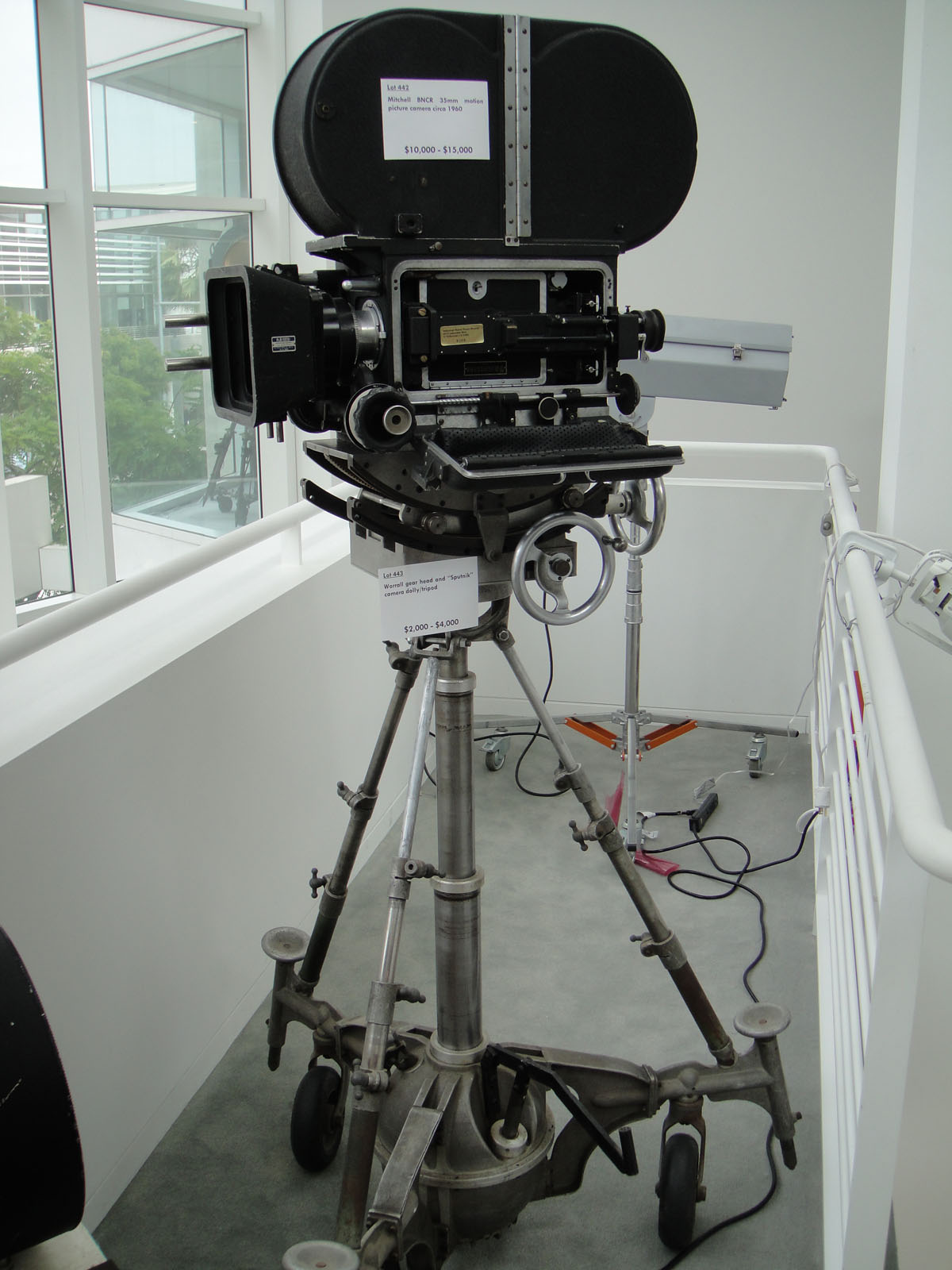
Before the camera could travel, it had to stand still and pan in a controlled way. The first tripods were heavy wooden tripods with friction heads. The decisive advance was the fluid head: a viscous damping medium creates even resistance, so that pans and tilts start and stop smoothly.
- O'Connor and Sachtler drove the development of precise fluid heads with adjustable damping and counterbalance.
- Vinten supplied rugged heads for studio and broadcast.
- Modern carbon-fibre tripods reduced weight drastically without sacrificing stability.
The fluid head remains to this day the invisible foundation of almost every shot — from news reportage to the feature film.
The camera learns to travel
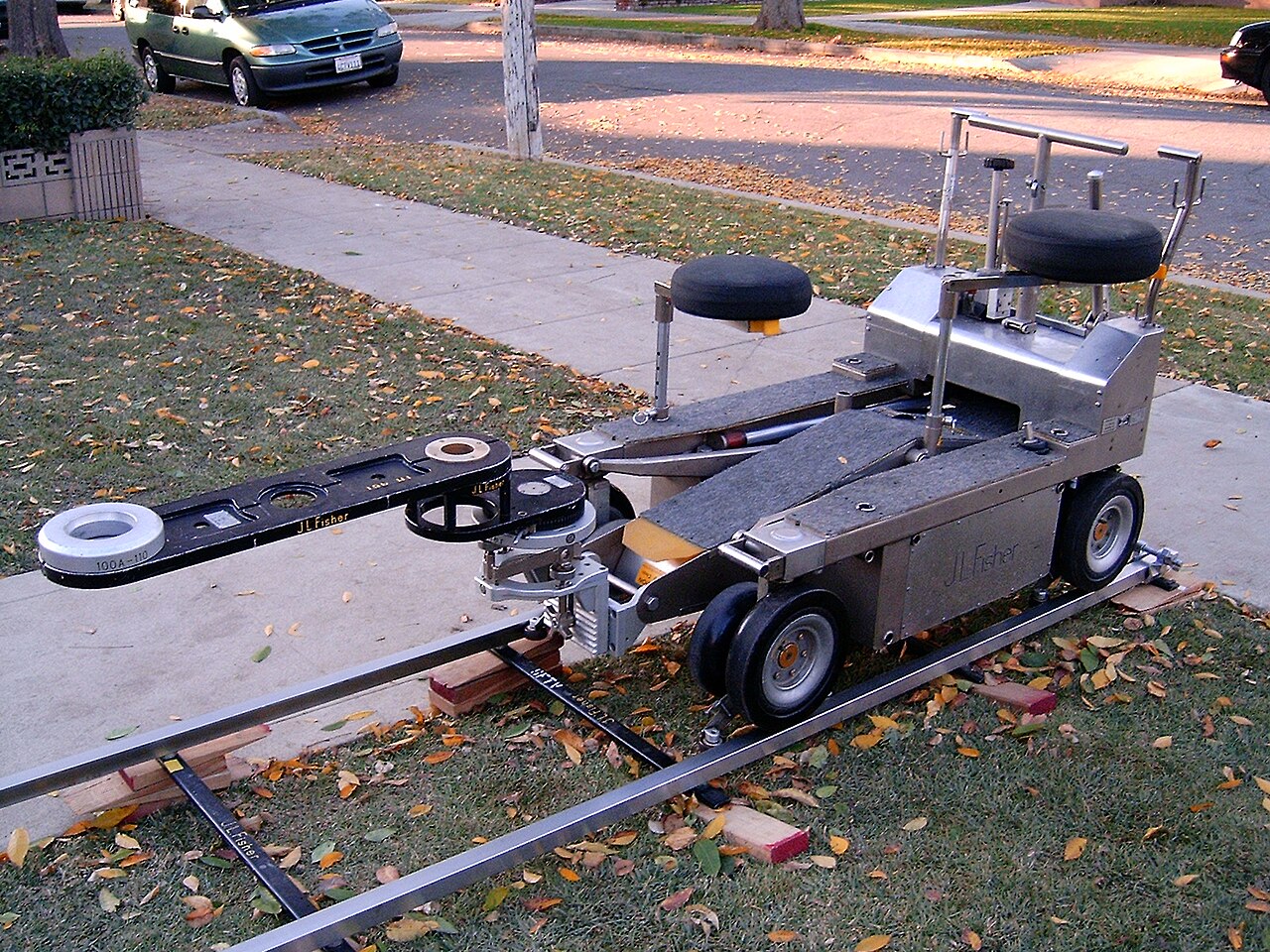
Directors discovered the power of movement as early as the silent era. In the epic „Cabiria" (1914), Giovanni Pastrone used tracking shots systematically — the camera trolley used for it is still remembered as the „carrello" (Italian for cart). The dolly — a rolling camera cart, often on laid track — became the core tool of the grip department.
- Crab dolly: the breakthrough was the omnidirectional „crab" dolly (from Chapman among others), whose wheels can steer sideways — for complex, flowing moves.
- Fisher dolly (J. L. Fisher): with a hydraulic, highly sensitive boom arm for precisely raising and lowering the camera on the move.
- Elemack: compact, versatile dollies from Italy, long a travel and studio standard.
Vertical movement and the high-angle view were provided by the camera crane: films such as „Intolerance" (1916) already used crane-like rigs; later, Chapman and other studio cranes became the standard for large, sweeping moves.
Off the tripod
As cameras became lighter (see History of the Film Camera), the operator could shoulder them. Shoulder rigs and cameras such as the Arriflex 16 SR or the Éclair NPR made handheld work a stylistic device of Cinéma vérité and Direct Cinema — immediate, moving with the action, „right there".
But handheld work came at a price: the inevitable shake of every step. It was precisely this problem that the next invention would solve.
The floating gaze
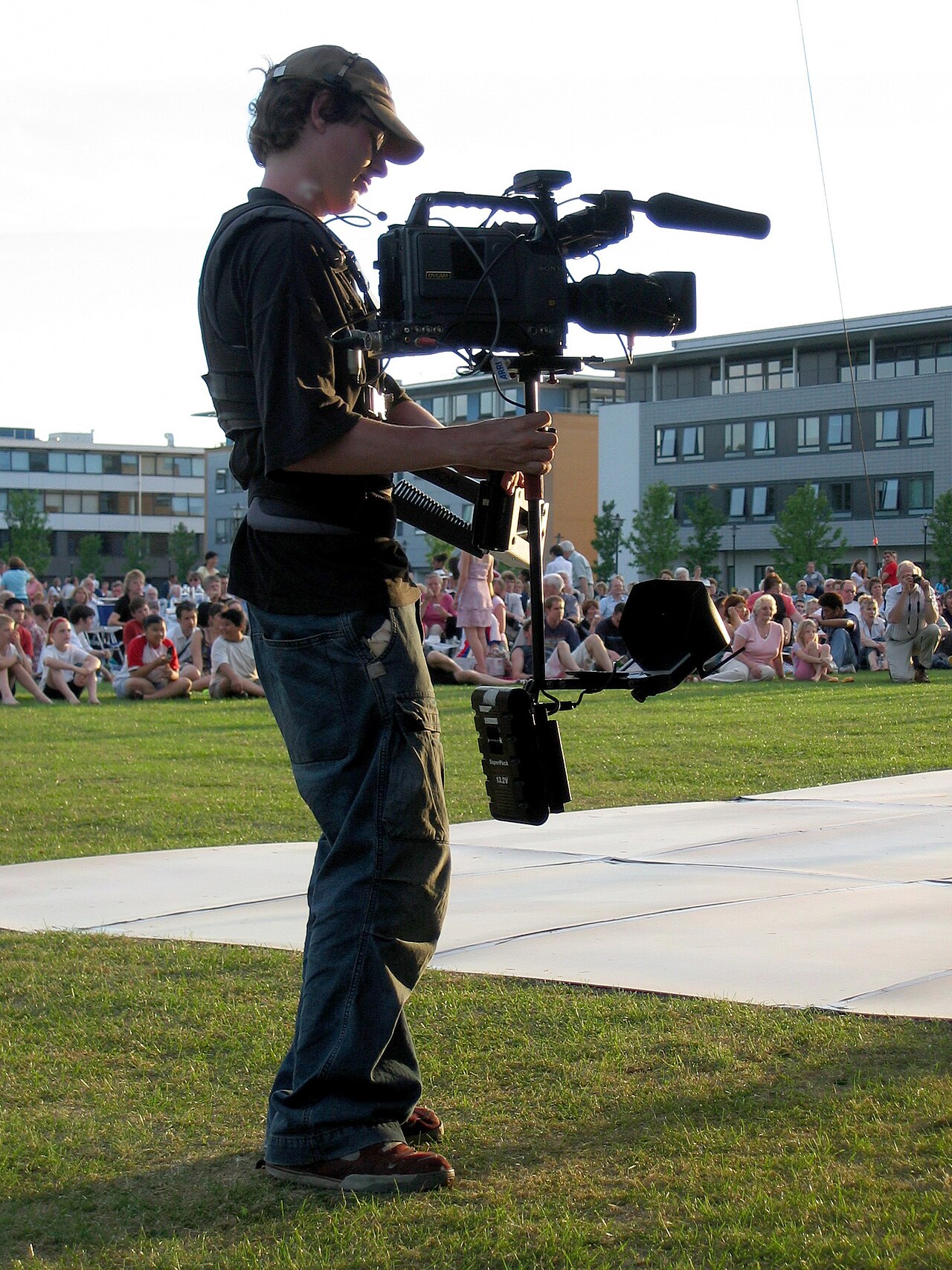
In 1975, the American Garrett Brown invented the Steadicam — a body-mounted stabilisation system that decouples the camera from the operator's movements. Via a sprung vest, an iso-elastic arm and a balanced sled, the camera „floats": the operator can walk, run and climb stairs — while the image stays steady and fluid.
From 1976 the Steadicam reached the cinema — Garrett Brown operated it himself on „Bound for Glory", „Marathon Man" and „Rocky" (the runs on the steps of the Philadelphia Museum of Art). For the invention, Brown received an Academy Award (Scientific/Technical) in 1978. For the first time, the Steadicam combined the mobility of the handheld camera with the steadiness of the dolly — without laying any track.
The „floating" Steadicam gaze became a visual language of its own — from long, unbroken sequence shots to chases in tight spaces where no dolly could go.
Remote heads and telescopic cranes
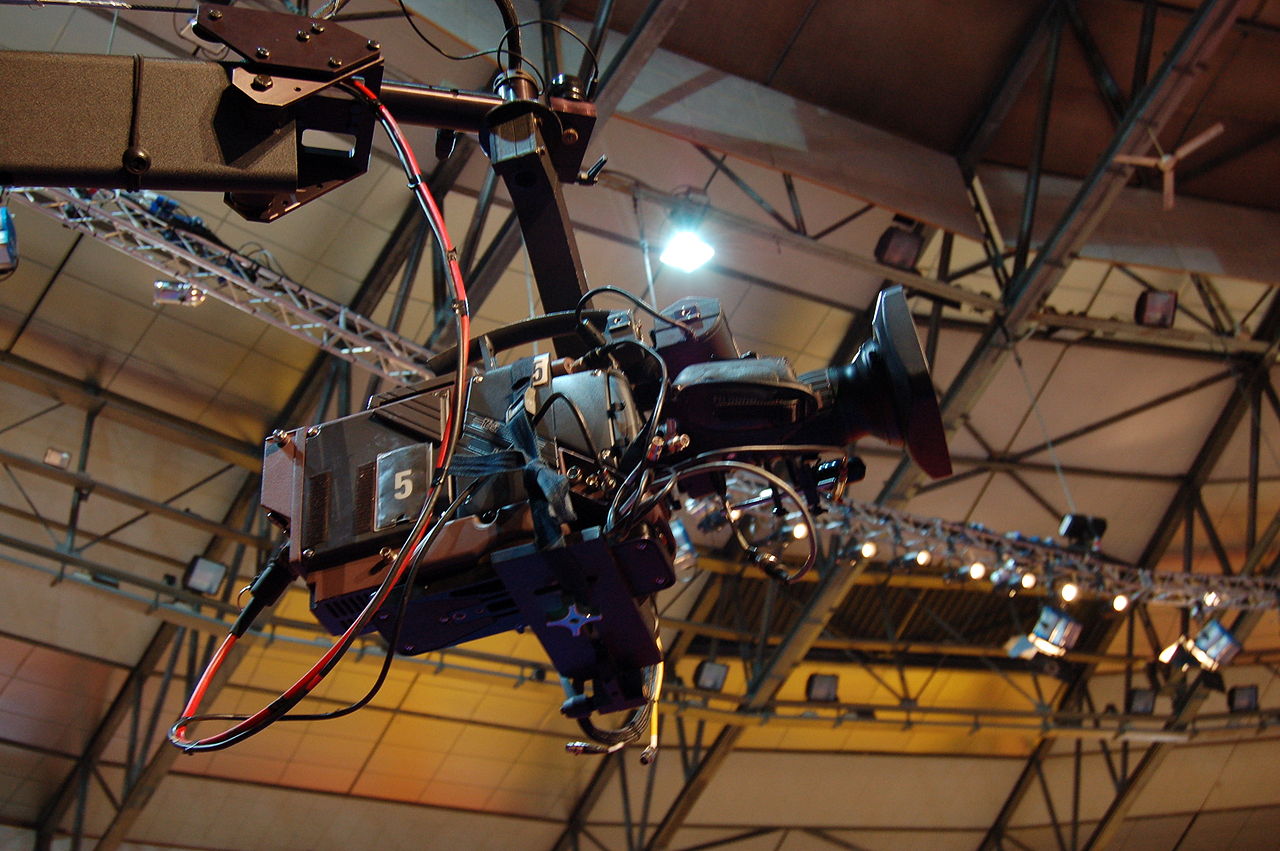
Camera movement became more technical and far-reaching. Remote heads (gyro-stabilised remote heads such as the Libra head) physically separated the operator from the camera — essential on cranes, vehicles and in positions no person could occupy.
- Technocrane (from the early 1990s): a telescopic crane whose arm can extend and retract during a move — enabling moves that were previously impossible (e.g. in through a window and on into the room).
- Camera-stabilised vehicles and gyro-stabiliser systems allowed steady shots from cars and helicopters.
Electronic stabilisation for everyone
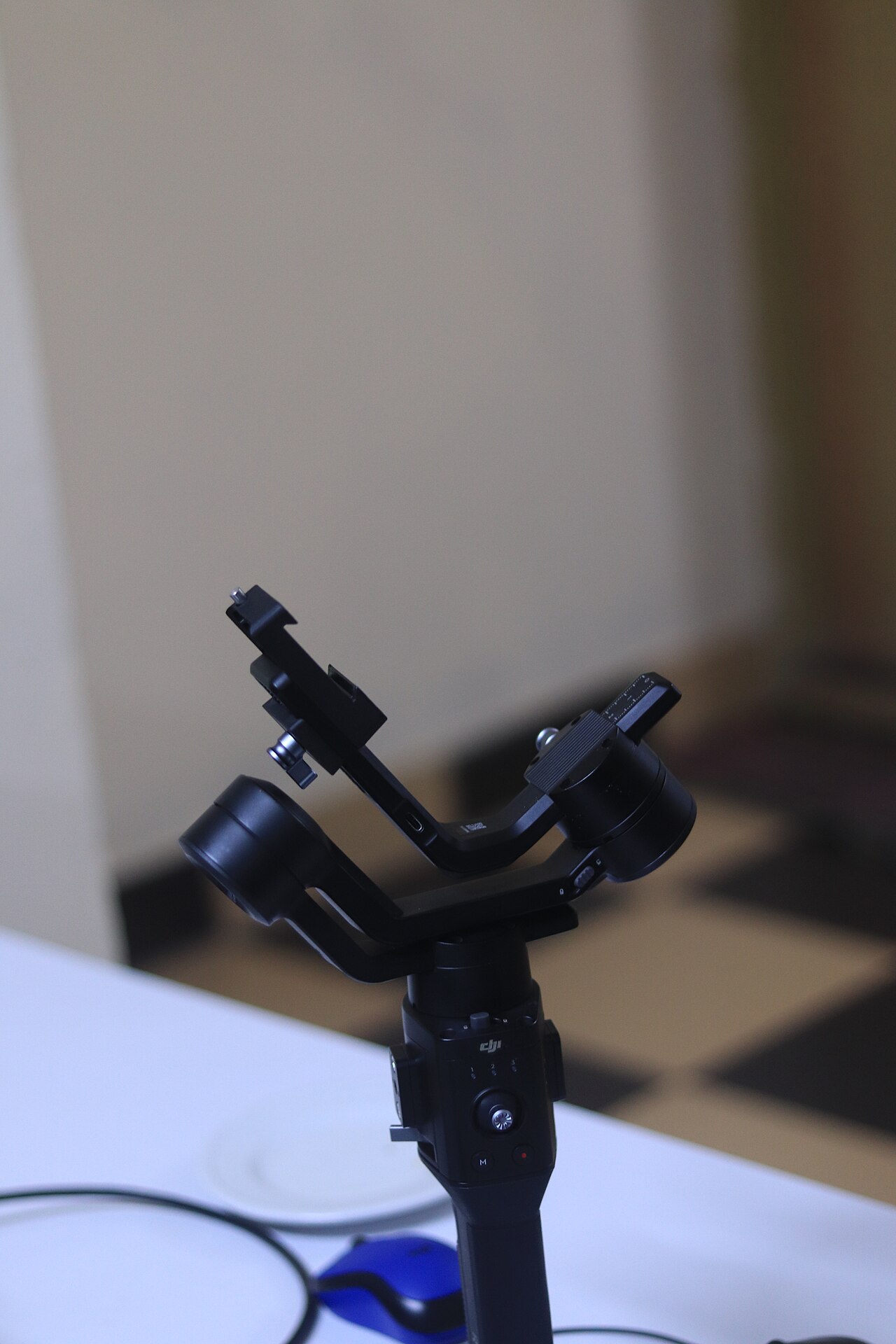
The latest revolution is electronic: the brushless 3-axis gimbal uses sensors to measure every movement and counteracts it in real time with three motors. What previously required a balanced mechanical Steadicam and a trained operator became achievable for almost anyone.
- Freefly MoVI (M10, 2013): one of the first compact brushless camera gimbals — the starting shot of the movement.
- DJI Ronin (2014): made the gimbal mainstream and a standard tool for independent, advertising and documentary productions.
- Drones with stabilised gimbals brought aerial shots — which once required a helicopter and a gyro system — within reach of affordable budgets.
Steadicam, crane and gimbal do not replace one another but complement each other: the Steadicam offers organic, „human" floating, the crane large vertical travel and precision, the gimbal compact, repeatable stability. Together they form today's vocabulary of camera movement.
Sources & further reading
- Wikipedia & Tiffen: Steadicam / Garrett Brown (1975; Bound for Glory, Marathon Man, Rocky, 1976)
- National Inventors Hall of Fame — Garrett Brown
- Manufacturers: Chapman/Leonard, J. L. Fisher, Elemack, Sachtler, O'Connor, Vinten
- Freefly (MoVI) & DJI (Ronin) — product history
- Film history: „Cabiria" (1914), the camera crane