Why the history of technology?
Film aesthetics have always been shaped by what was technically possible. When Robert J. Flaherty shot the first commercially successful feature-length documentary with Nanook of the North in 1922, cameras were still hand-cranked and scenes lit with carbon arc lamps.
Barely a century later, images are made with high-sensitivity digital sensors, daylight-white HMI and LED fixtures, and cameras that float freely through space. Every one of these leaps — the reflex mirror, flame-free discharge light, the Steadicam, the brushless gimbal, the digital sensor — changed which stories could be told at all. The timeline below summarises the most important documented milestones; the topic pages go deeper into camera, lighting and grip.
Timeline of Film Technology
Documented key dates from over a century of camera, lighting and grip history.
Kinetoscope & Cinématographe
Edison's Kinetoscope (1894) still showed moving images to one viewer at a time. The Lumière brothers used the Cinématographe to project film for an audience for the first time — the first commercial screening took place on 28 December 1895 in Paris.
Bell & Howell 2709
The rugged all-metal 35 mm studio camera became a precise tool for the young Hollywood industry and stayed in service for decades.
The founding of ARRI
On 12 September 1917, August Arnold and Robert Richter founded „Arnold & Richter" in Munich — to this day one of the most influential names in camera and lighting technology.
Nanook of the North
Robert J. Flaherty shot the first commercially successful feature-length documentary — still lit with carbon arc lamps. The starting point of this chronicle.
Mole-Richardson & Tungsten
Mole-Richardson standardised the tungsten Fresnel fixture for Hollywood — the „Baby", „Junior" and „Senior" spots defined studio lighting for decades.
Arriflex 35
The first production-ready 35 mm reflex camera: the rotating mirror shutter allowed parallax-free viewing through the taking lens — a principle that shapes camera design to this day.
Éclair — lightweight handheld cameras
The Éclair Cameflex (1947) and later the Éclair NPR (1960) made the camera mobile and became key tools of Cinéma vérité and Direct Cinema.
Panavision
Robert Gottschalk founded Panavision initially for the anamorphic lenses of the CinemaScope era — the cornerstone for later cameras and widescreen cinema.
The HMI lamp
OSRAM introduced the daylight-white HMI discharge light (first public use in 1969) — replacing the dangerous carbon arc lamp and making daylight in the studio affordable.
Panavision Panaflex
The quiet, blimp-free 35 mm camera allowed sync sound on handheld shots and became the studio standard.
The Steadicam
Garrett Brown invented body-mounted camera stabilisation. In cinemas from 1976 (Bound for Glory, Marathon Man, Rocky) — the floating gaze became a visual language of its own.
Kino Flo
On the set of Barfly, gaffer Frieder Hochheim and Gary Swink built flicker-free, cool fluorescent light with a remote ballast — the foundation of the company Kino Flo.
The first digital blockbuster
Star Wars: Episode II was shot entirely digitally with the Sony CineAlta HDW-F900 — the first major Hollywood film without a 35 mm negative.
RED One
The RED One delivered 4K digital cinema at a price that let independent productions shoot at true cinema resolution for the first time.
The DSLR revolution
The Canon EOS 5D Mark II was the first DSLR with Full HD video — suddenly a whole generation was filming with a full-frame cinematic look at the price of a stills camera.
ARRI Alexa
With the Alexa's Super 35 sensor, ARRI established the new digital industry standard — its colour rendering and dynamic range set the benchmark.
Brushless gimbals
Freefly MoVI and DJI Ronin brought electronically stabilised movement to handheld shooting — what previously required a Steadicam operator and a crane became accessible to everyone.
The LED era: ARRI SkyPanel
The SkyPanel made controllable, colour-changing LED soft light a set standard — bi-colour, RGB and effects at the push of a button.
LED volumes
The Mandalorian showcased „StageCraft": huge LED walls provide both background and lighting in one — light and set merge.
The large-format present
ARRI Alexa 35, RED V-Raptor and Sony Venice 2 mark the era of high-resolution large-format sensors with enormous dynamic range.
Three crafts in detail
Each topic page follows the same chronicle — but explores one craft in depth, from the beginnings to the present.
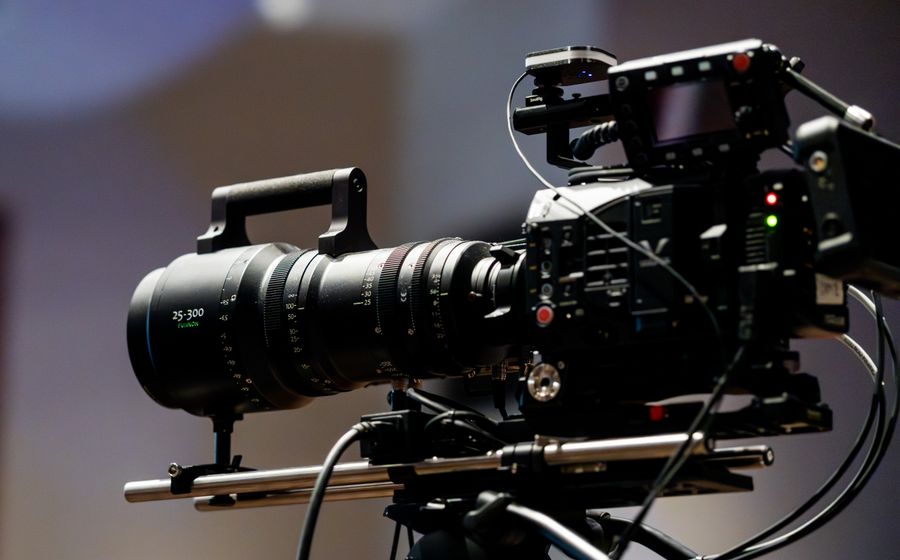
History of the Film Camera
Hand crank, reflex mirror, Panaflex, RED and ARRI Alexa — the evolution from the pioneering era to large-format digital cinema.
View cameras →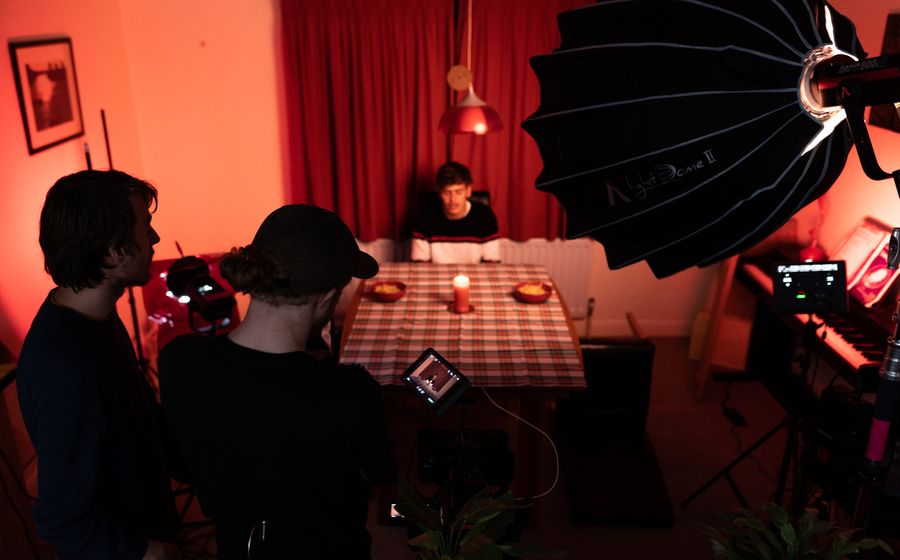
History of Film Lighting
From the carbon arc lamp through tungsten and HMI to Kino Flo and the controllable LED wall.
View lighting →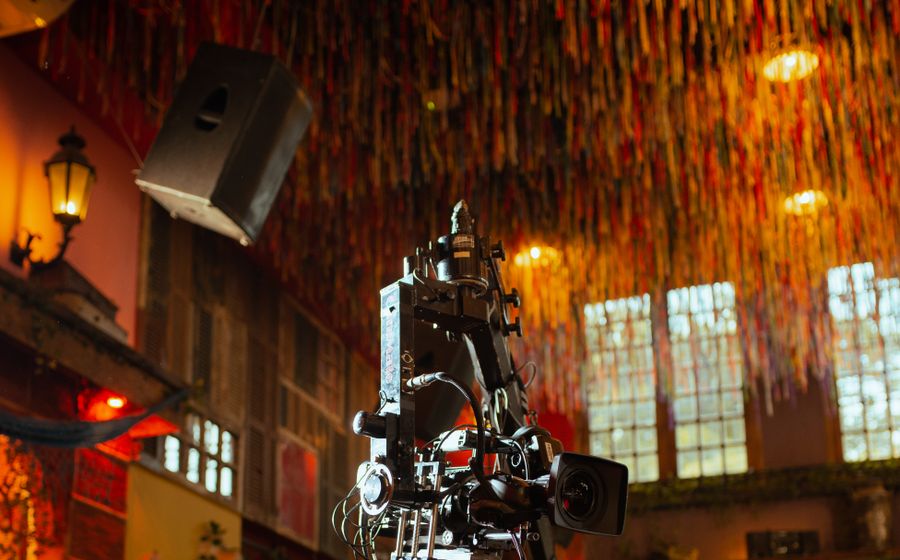
Camera Movement & Grip
Dolly, crane, Steadicam and gimbal — how the camera learned to travel, float and fly.
View grip →