The camera learns to run
The fundamental problem of early cinema was mechanical: how do you move film intermittently, yet precisely, frame by frame past the lens? Thomas Edison and his associate W. K. L. Dickson built a first working chain with the Kinetograph (recording) and the Kinetoscope (single-viewer peep-show, 1894) — but without projection for an audience.
The decisive step came in 1895 from the brothers Auguste and Louis Lumière: their Cinématographe was camera, printer and projector in one — light and hand-cranked. The first commercial public screening took place on 28 December 1895 at the Salon Indien of the Grand Café in Paris and is regarded as the birth of cinema.
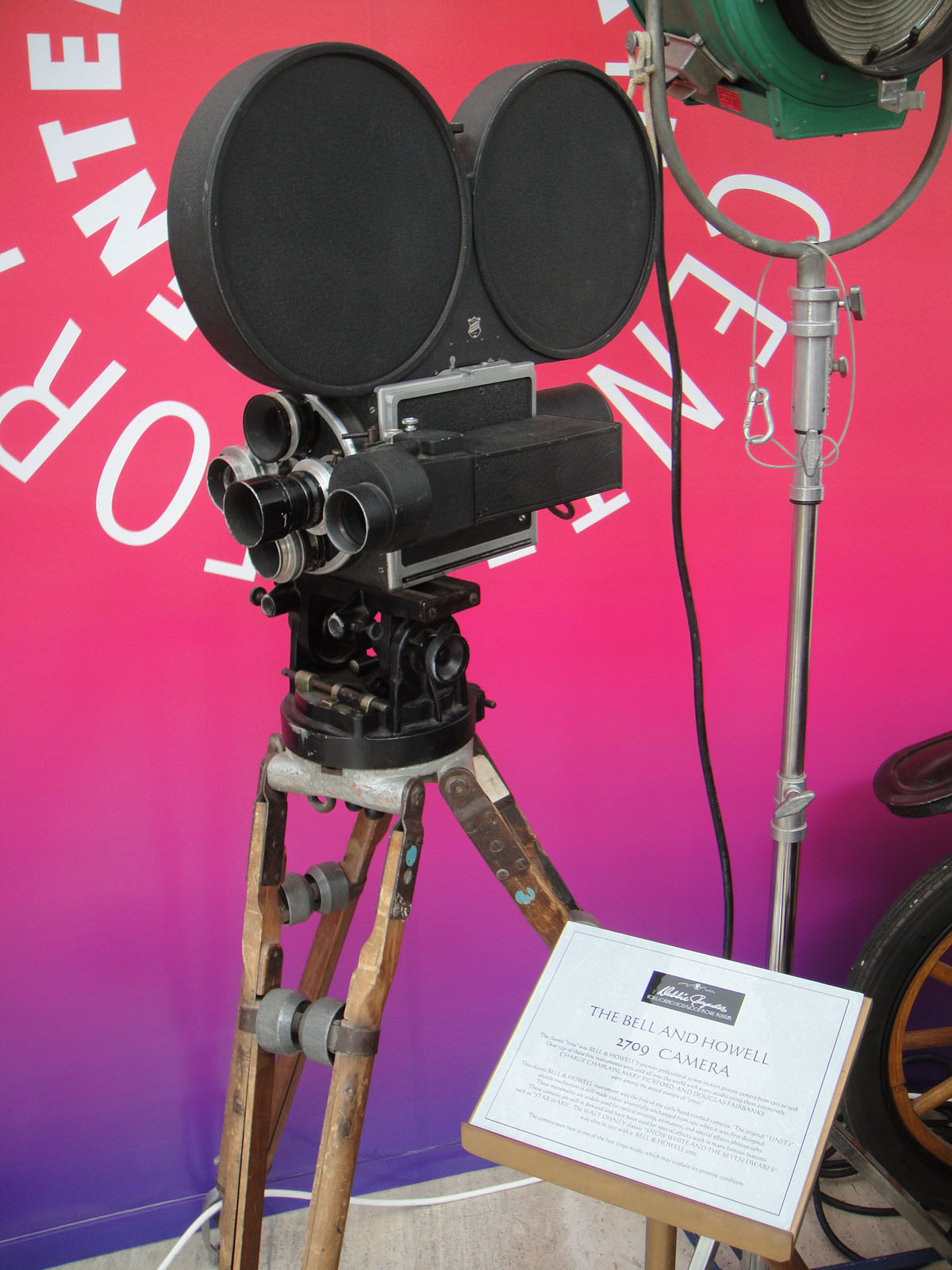
- Bell & Howell 2709 (from 1912): one of the first rugged all-metal 35 mm cameras with a precise pin-registration movement — the studio standard of the silent era.
- Exposure and pace literally depended on the wrist: the operator cranked by hand, and the frame rate varied — 16 to 18 frames per second were typical.
This period of upheaval also includes Robert J. Flaherty's „Nanook of the North" (1922) — the first commercially successful feature-length documentary, shot under Arctic conditions with the technology of its time. It marks the starting point of this chronicle.
Precision, reflex and the view through the lens
With the arrival of sound film from 1927, cameras had to be not only precise but also quiet — running mechanics would have disturbed the microphone. The answer was heavy, sound-insulated studio cameras such as the Mitchell Standard (from 1920) and later the Mitchell BNC (Blimped News Camera, 1934), which shaped Hollywood for decades.
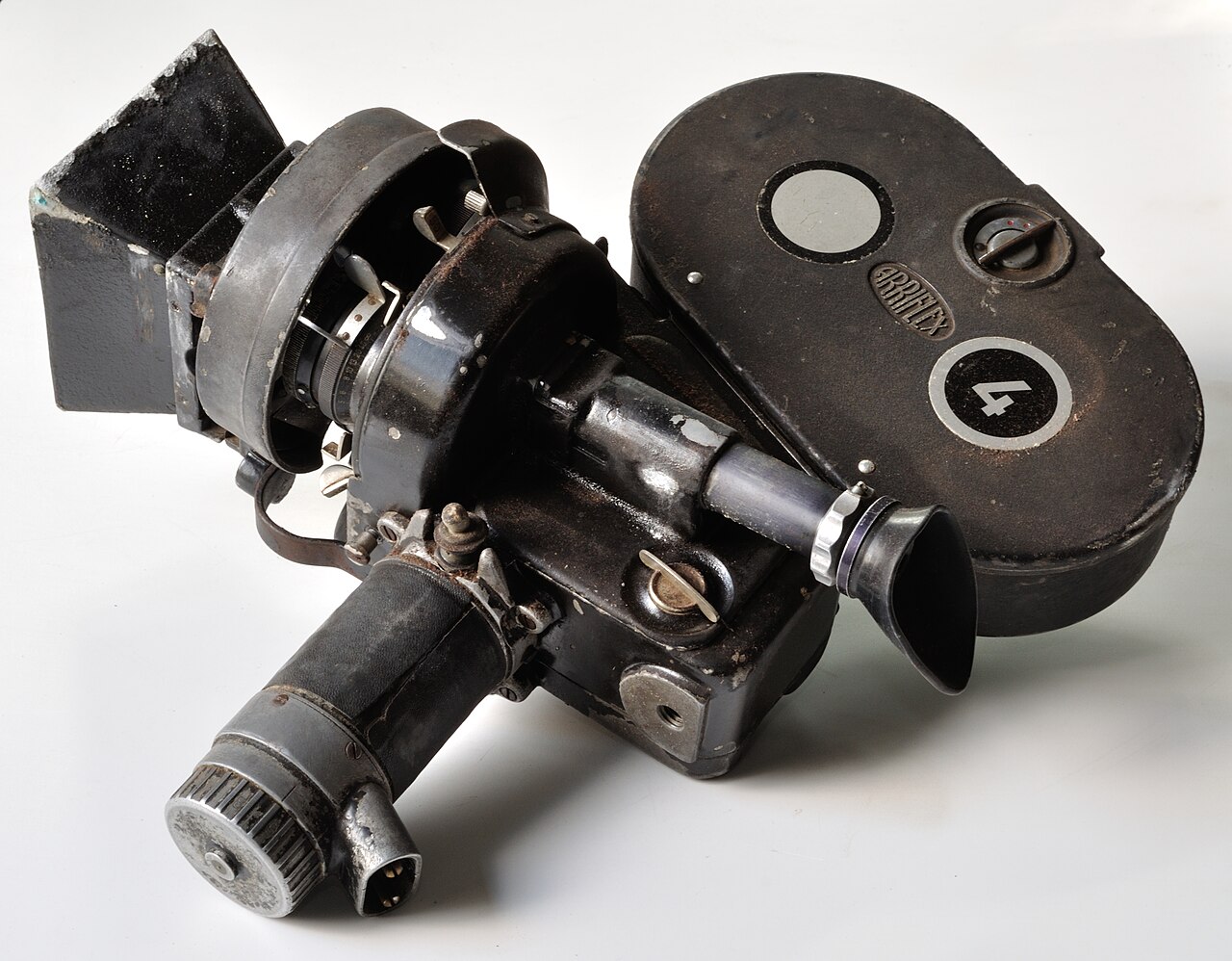
The most consequential invention of this era came from Munich in 1917: on 12 September 1917, August Arnold and Robert Richter founded the company Arnold & Richter (ARRI). In 1937 they introduced the Arriflex 35 — the first production-ready 35 mm reflex camera.
The Arriflex 35's rotating mirror shutter directed the light alternately onto the film and into the viewfinder. For the first time the operator saw exactly the image of the taking lens — parallax-free and in correct focus. The principle was so fundamental that ARRI received an Academy Award of Merit for it in 1983.
In parallel, France produced the Éclair Cameflex (1947), a light, convertible 35/16 mm camera with quick-change magazines — a forerunner of the mobile cameras that would transform the cinema of the 1960s.
The camera goes mobile
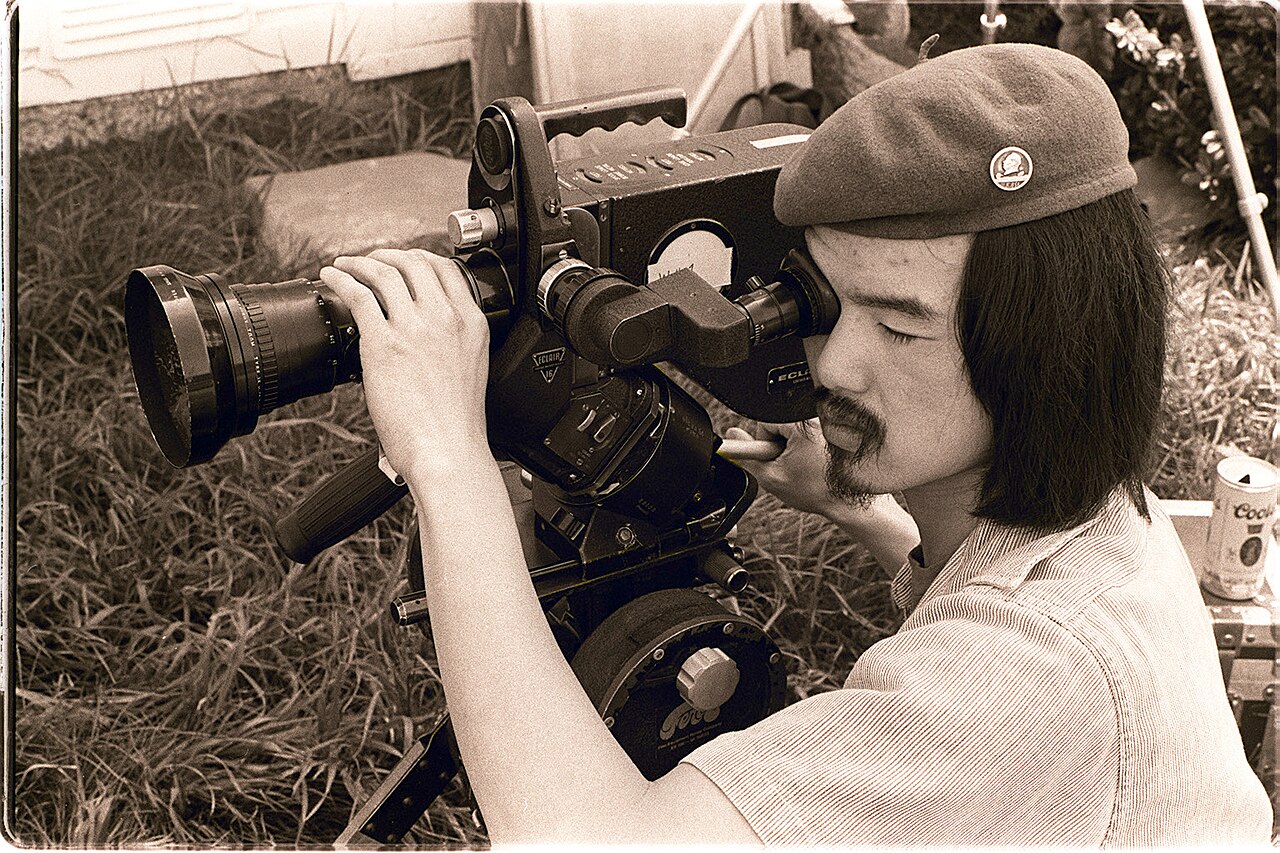
Lighter, portable cameras freed the camera from the tripod and enabled a new, immediate style. The Éclair NPR (Noiseless Portable Reflex, 1960) became the tool of Cinéma vérité and Direct Cinema: documentary filmmakers could now literally follow the action.
- Arriflex 16 ST / 16 BL: 16 mm cameras that made reportage, advertising and independent film affordable.
- Aaton (founded in 1971 by Jean-Pierre Beauviala): ergonomic, „shoulder-friendly" cameras — famously described as „a cat on the shoulder".
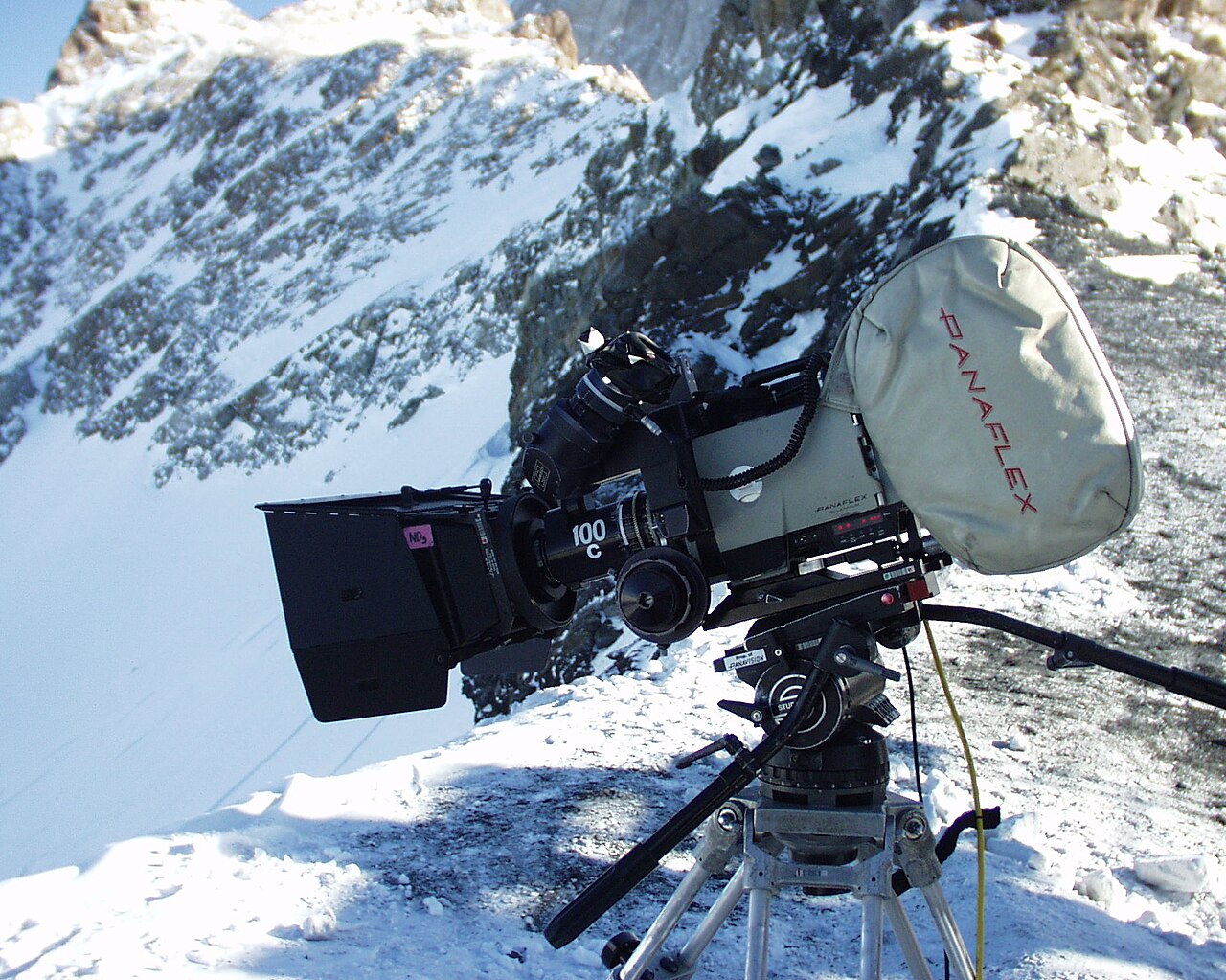
- Panavision, founded in 1954 by Robert Gottschalk initially for anamorphic lenses, released the Panaflex in 1972: quiet, blimp-free and light enough for the shoulder — with full sync sound.
Only when the camera combined sound, mobility and image quality could handheld aesthetics and long, following shots become a deliberate stylistic device — not a compromise, but a choice.
Two parallel worlds
While 35 mm remained the cinematic gold standard, the electronic image was becoming professional. Betacam (Sony, from 1982) and later Betacam SP established a robust broadcast format for news and television. For a cinematic look on a smaller budget, Super 16 offered a larger negative that blew up well to 35 mm or HD.
The two worlds were converging: video grew sharper, while film remained more dynamic and truer in colour. The question was no longer whether, but when the digital moving image would be fit for cinema.
The negative becomes optional
The dam broke with Star Wars: Episode II – Attack of the Clones (2002): the first major Hollywood film shot entirely digitally — with the purpose-built Sony CineAlta HDW-F900 (24p, HD). George Lucas proved that a blockbuster could do without a 35 mm negative.
Two devices then democratised the movement:
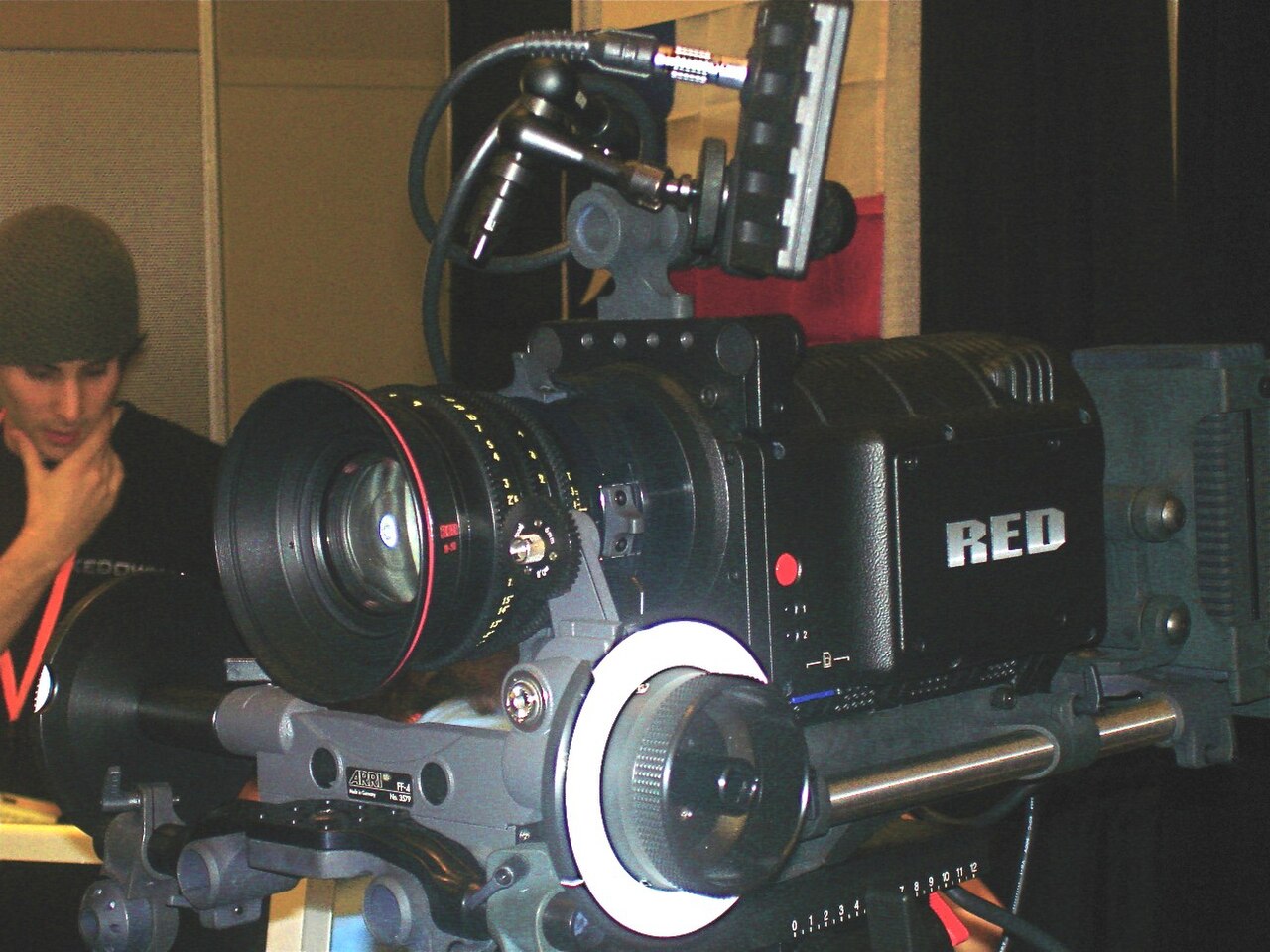
- RED One (2007): 4K resolution in a modular body at a price that gave independent productions serious digital cinema for the first time.
- Canon EOS 5D Mark II (announced 17 September 2008): the first DSLR with Full HD video. Suddenly a stills camera for under €3,000 delivered a full-frame cinematic look with interchangeable lenses — the „DSLR revolution".
The 5D Mark II was not the first video-capable DSLR — the Nikon D90 (720p) arrived about two weeks earlier. But it was the Canon's full frame and shallow depth-of-field look that triggered the movement which lastingly changed YouTube, advertising and independent film.
The new standard is the sensor
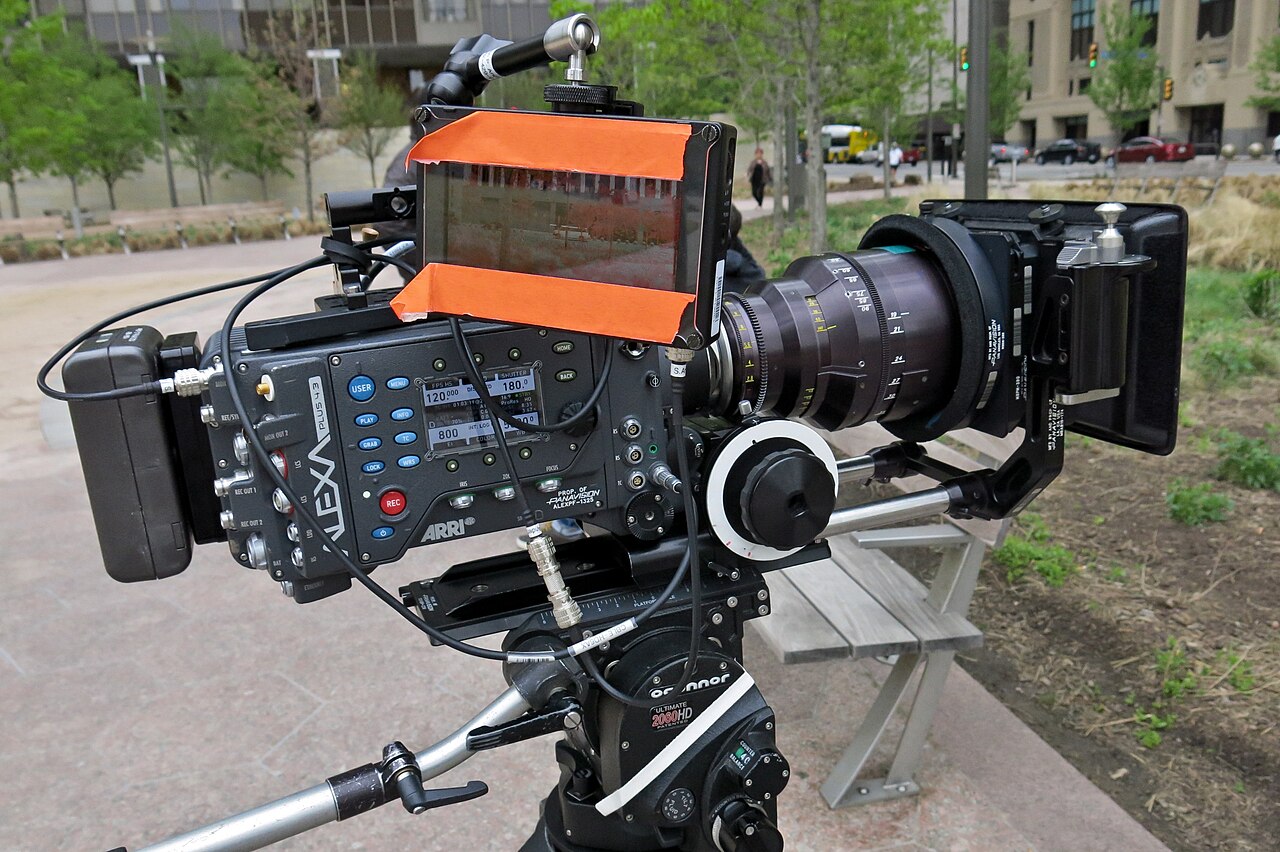
In 2010, ARRI set the reference point for digital cinema with the Alexa: its Super 35 sensor delivered colour rendering and a dynamic range that finally overcame the „digital" look. The Alexa family became the most widely used camera in award-winning productions.
Since then, sensor size in particular has driven development — towards Large Format (larger than Super 35), which allows softer bokeh and a wider field of view:
| Camera / Family | Manufacturer | Classification |
|---|---|---|
| Alexa 35 (2022) | ARRI | New sensor generation, Super 35, benchmark for dynamic range |
| Alexa LF / 65 | ARRI | Large-format and 65 mm digital cinema |
| V-Raptor / Komodo | RED | High-resolution, compact, large format and Super 35 |
| Venice / Venice 2 | Sony | Full-frame cinema, dual base ISO |
| Pocket Cinema / URSA | Blackmagic | Democratises cinema raw for small budgets |
Development has come back to its starting point — only in reverse: where the pioneering era was about capturing a moving image at all, today it is about shaping a deliberate visual language out of an abundance of resolution, dynamic range and colour depth.
Sources & further reading
- ARRI — company history & Arriflex 35
- Panavision — History & Awards
- Sony CineAlta / Wikipedia
- RED Digital Cinema / Wikipedia
- Canon EOS 5D Mark II / DPReview
- Wikipedia: Cinematograph, Nanook of the North, Éclair, Aaton